Teaching Networking, DevOps and ML in Sinhala
A bitwise subnet visualiser, a DevOps handbook built from real lab failures, Sinhala SRE labs and an MNIST drawing canvas.
Many Sri Lankan students understand networking or DevOps concepts far faster when they're explained in Sinhala than from an English-only textbook. Often the concept isn't the barrier — the language is.
Three projects in this portfolio are my answer — interactive learning hubs where the explanation comes in the language you think in.
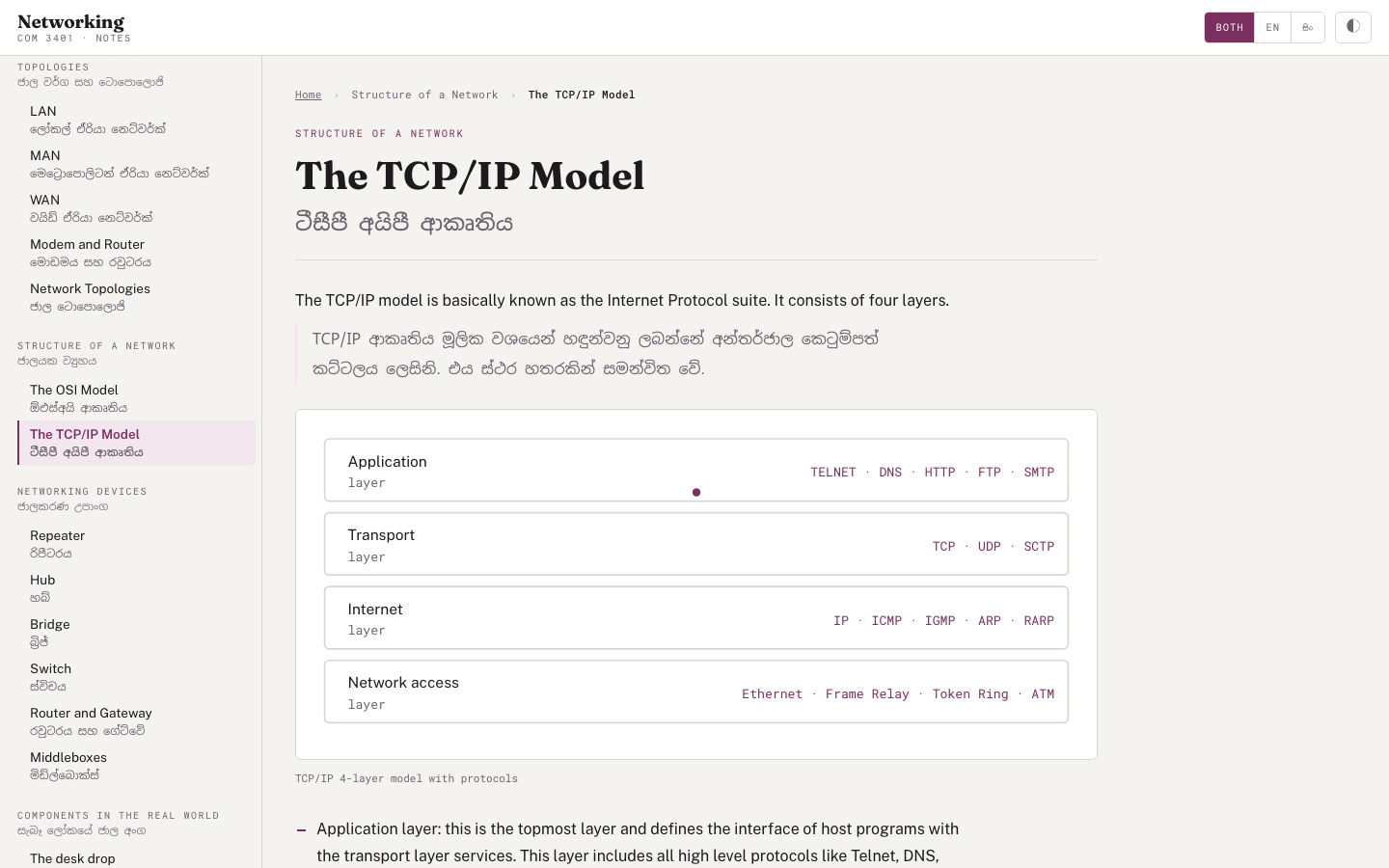
Data Communication & Networking Hub
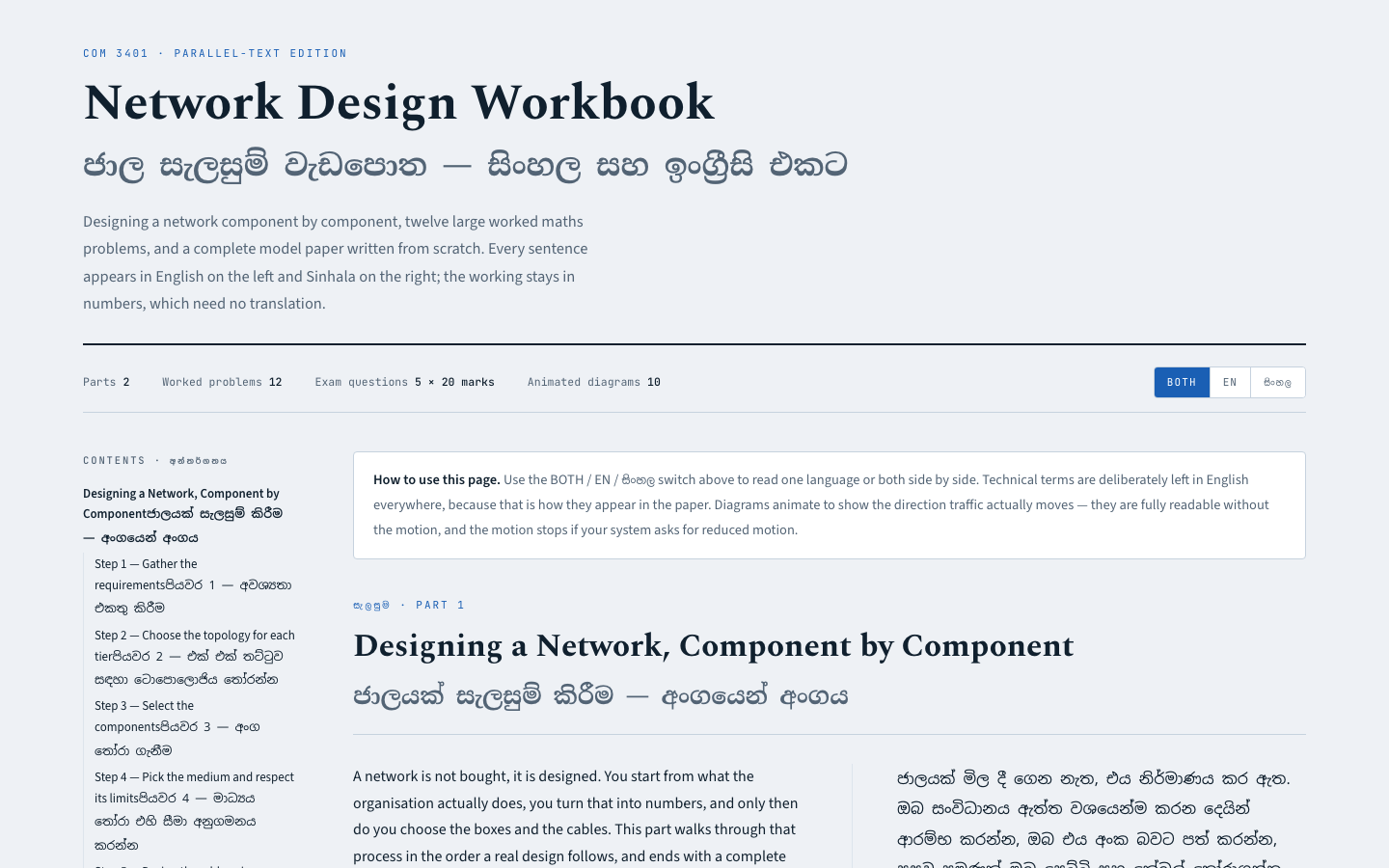
An interactive hub with a network design workbook, a TCP/IP model simulator and a full Sinhala study guide, covering packet routing, CIDR/VLSM, the OSI layers and the devices (routers, switches, repeaters, bridges).
The bitwise subnet visualiser is the piece that clicks for people. Slide a CIDR prefix from /8 to /30 and the 32-bit address re-renders with network bits and host bits in different colours, alongside the mask, the network and broadcast addresses and the usable host count. Subnetting stops being a formula and becomes a picture.
192.168.10.77/26
11000000.10101000.00001010.01|001101
└────────── network (26) ──────┘└host┘
mask 255.255.255.192 · network .64 · broadcast .127 · 62 usable hosts
Bilingual by design. DHCP's four-way handshake, NAT port forwarding and ARP tables are explained in Sinhala first, with the English terms kept intact — because the exam and the job are in English.
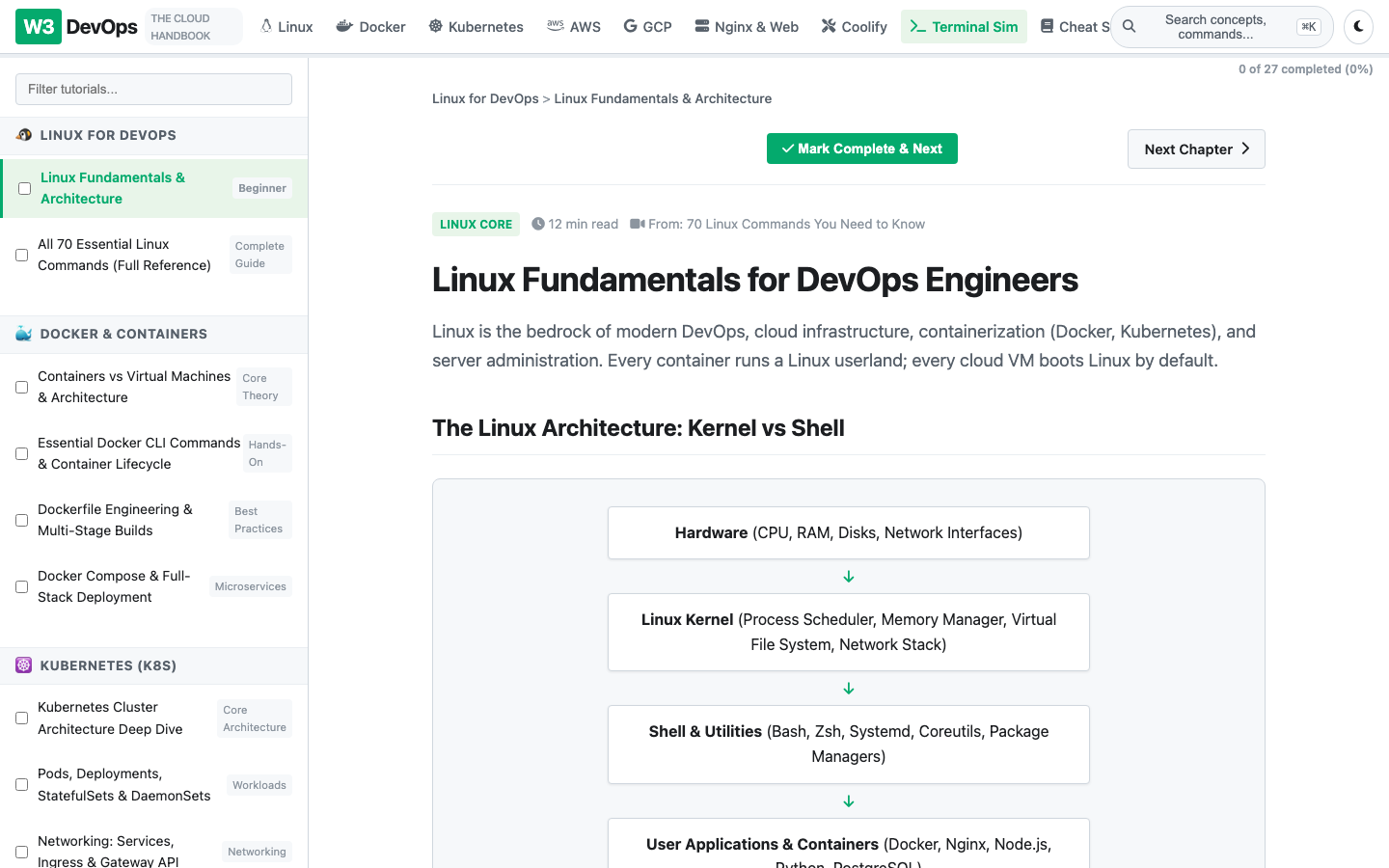
W3DevOps — a handbook from real labs
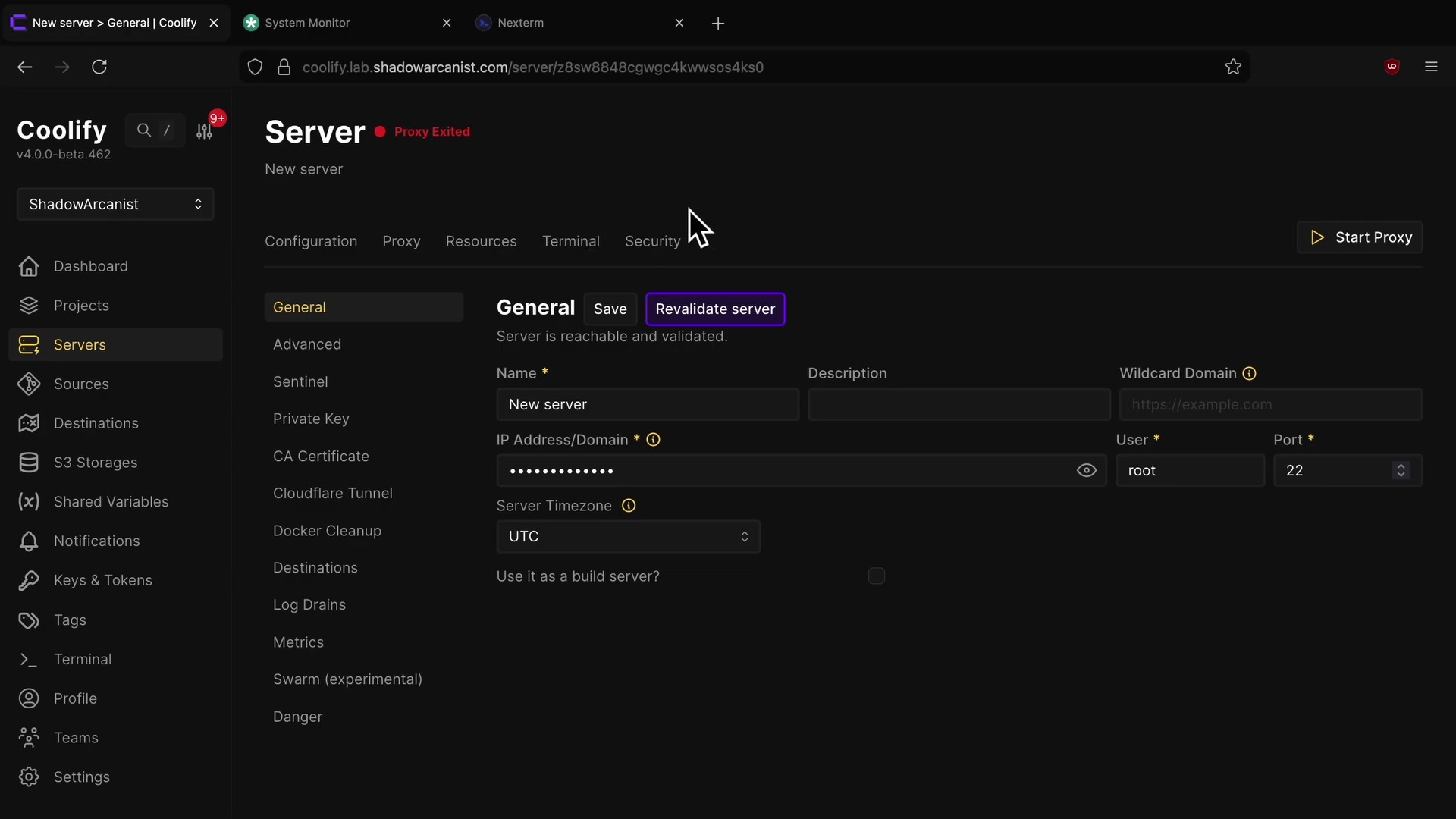
W3DevOps is a W3Schools-style portal I built while learning DevOps: 27 chapters across 7 tracks (Linux, Docker, Kubernetes, AWS, GCP, production web, Coolify), 136 screenshots from the labs, a live terminal simulator, a searchable 70-command cheat sheet and a 25-question exam. It's 100% static HTML/CSS/JS — it can be hosted on S3 + CloudFront for fractions of a cent.
The deliberate choice was to keep real failures in: SSH authentication errors, firewall permission denials, container crash loops. Clean tutorials teach the happy path; screenshots of errors teach you what you'll actually see.
The whole handbook is now on this site as the DevOps series, and the Self Guide turns it into a step-by-step learning path.
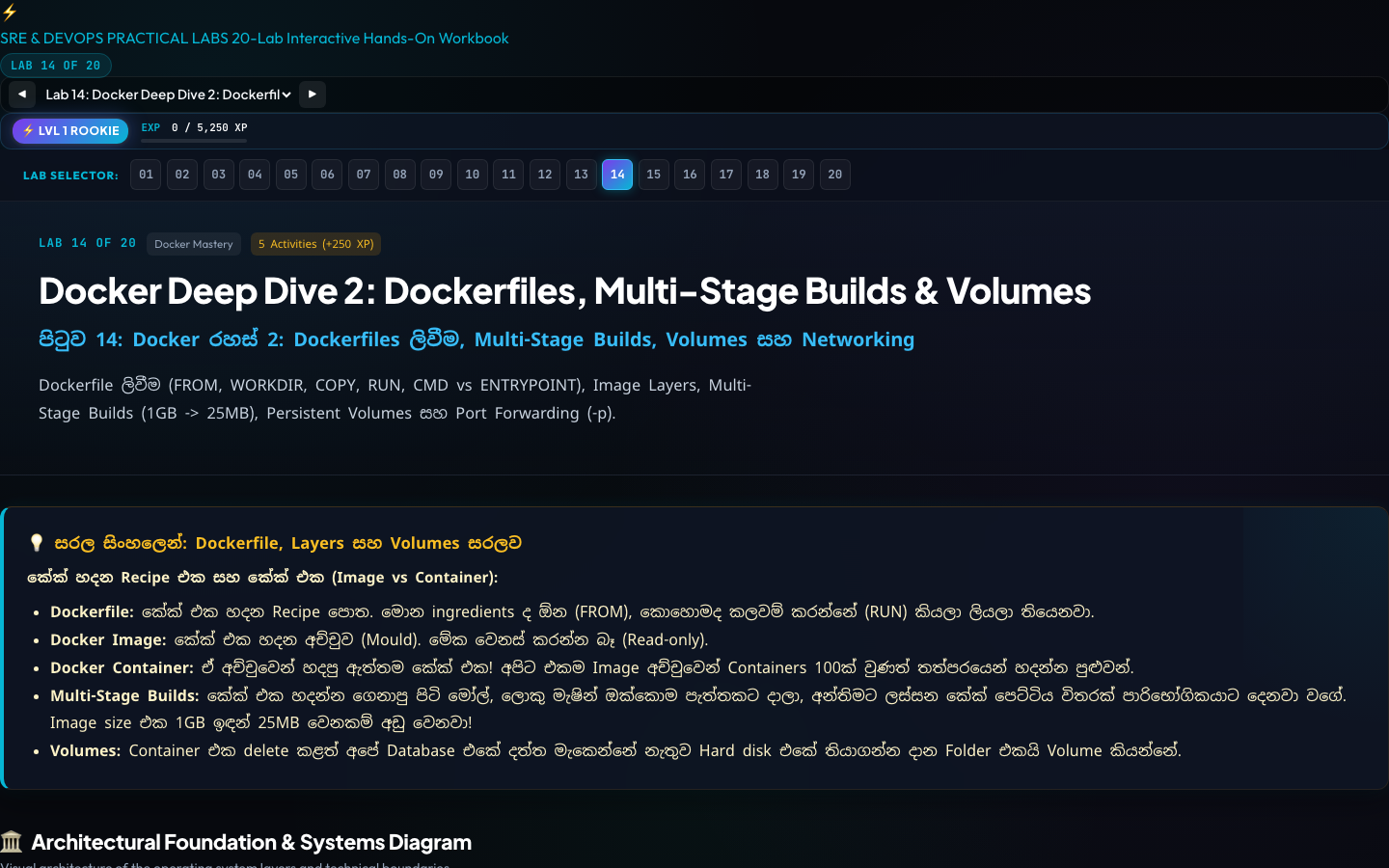
SRE workbook — Sinhala labs for hard topics
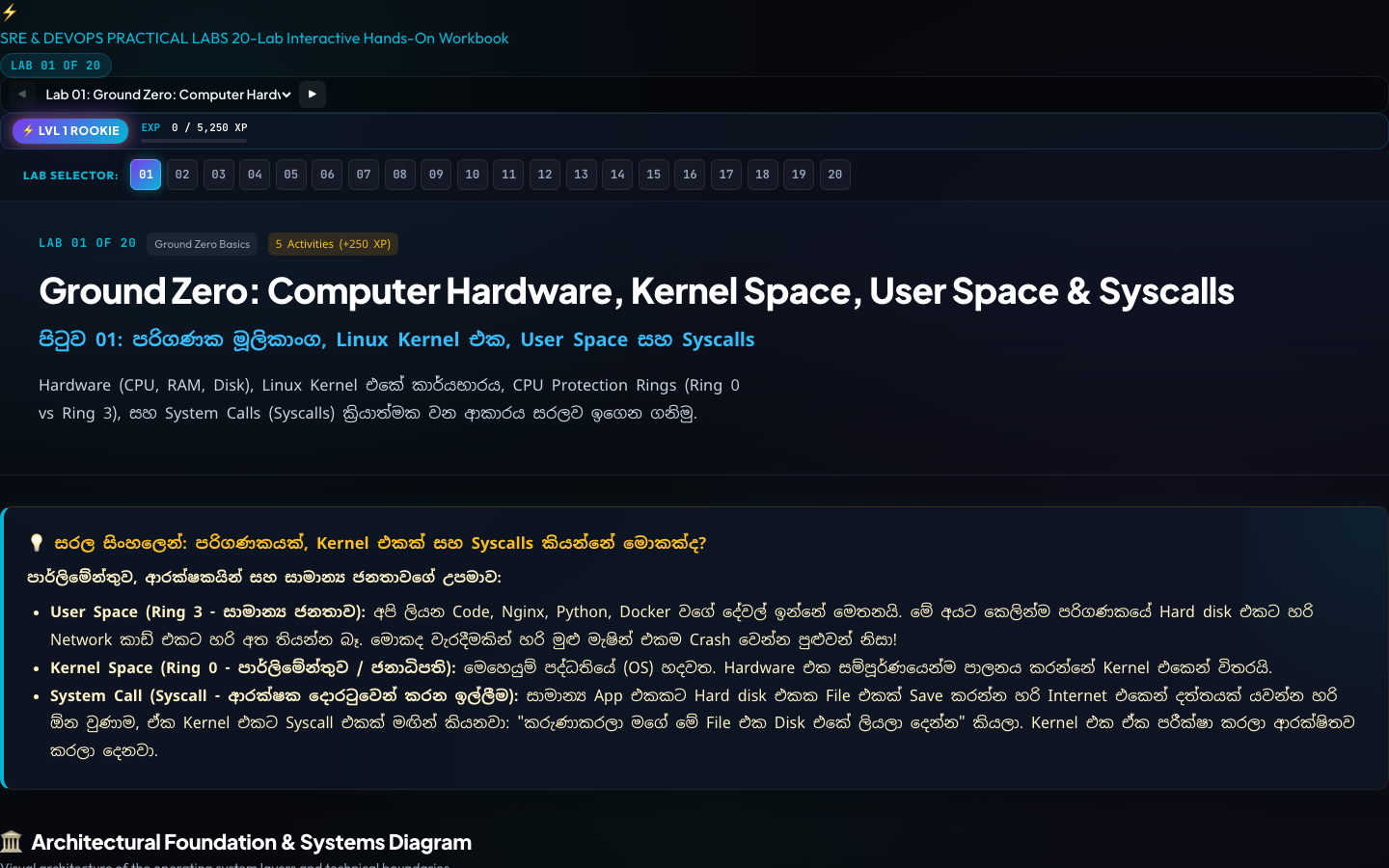
The SRE practical workbook has 20 labs with XP and levels, explained bilingually: Lab 01 starts at hardware, kernel space, user space and syscalls, and the track builds up to Docker deep dives and incident response.
ML Playbook
A curriculum from regression and classification to CNNs, with Jupyter implementations and a live drawing canvas to test an MNIST model with your own mouse or finger. Models are exported to quantised ONNX for in-browser inference, so there's nothing to install.

What I learned building learning tools
- Interactive beats illustrated. A slider that moves bits teaches more than a diagram of bits.
- Keep the English terms. Translate the explanation, not the vocabulary people will be tested on.
- Static is accessible. A static site loads on a phone on a campus data plan; that's the audience.
- Show the errors. Learners trust material that admits things break.
Finished this one?
Progress is saved in this browser.
Projects in this article