The Disruption of Sri Lankan Tourism — The Death of the Old Route and Rise of Distributed Travel
Why the fragile golden corridor is dying, and how decentralized eco-hubs and remote builders will reinvent the island.
Volume V: Macro Futures, Sri Lanka's Horizon & Civilizational Anchors
The Fragility of the Golden Corridor
For more than four decades, Sri Lanka’s tourism industry has operated on a tired, lazy, and dangerously fragile blueprint: the so-called 'Golden Corridor.' Flocks of packaged tourists are loaded onto diesel tour buses at Bandaranaike International Airport, shuttled along a predictable, congested circuit—Colombo to Kandy, up to the tea estates of Nuwara Eliya, down to the beaches of Mirissa and Galle, and back to the airport—before being flown home.
This legacy model is fundamentally broken. It treats an island with 2,500 years of profound civilizational history, diverse ecological microclimates, and vibrant cultural traditions like a cheap amusement park. It concentrates tourism revenue in the hands of a few Colombo-based conglomerate hotel chains while leaving the vast majority of provincial communities with crumbs. Worse, it leads to severe environmental degradation: diesel buses choking narrow mountain passes, plastic waste choking coastal reefs, and commercial tourist traps hollowing out local authenticity.
Furthermore, the Golden Corridor is acutely vulnerable to macro shocks. An epidemic, a political crisis, a currency fluctuation, or an aviation fuel spike instantly brings the entire industry to a grinding halt, leaving thousands of hotel workers destitute overnight. Relying on mass packaged tourism as a primary foreign exchange pillar is macroeconomic suicide.
The Rise of the Kinetic Distributed Traveler
Having traversed the length and breadth of Sri Lanka with a backpack, working on high-level technical projects from remote villages, I have witnessed the emergence of a completely different demographic: the distributed, high-agency traveler.
These are not sunburned tourists looking for cheap cocktails on a crowded beach. They are sovereign remote builders, software engineers, independent researchers, writers, and digital creators who are unmoored from geographic offices. They do not travel for two-week packaged vacations; they live distributed lives, staying in regions for one to three months at a time. They seek deep cultural immersion, ecological stillness, reliable high-speed connectivity, and an environment that fosters intellectual creativity and biological health.
How I see things is that distributed travel represents a multi-billion-dollar economic renaissance for Sri Lanka if the nation possesses the vision to build the infrastructure. A single remote engineer living in a highland village for three months injects vastly more sustained, decentralized economic value into the local economy—patronizing family-owned produce stalls, renting local homestays, hiring local guides—than a dozen tour-bus passengers who stay in corporate all-inclusive resorts.
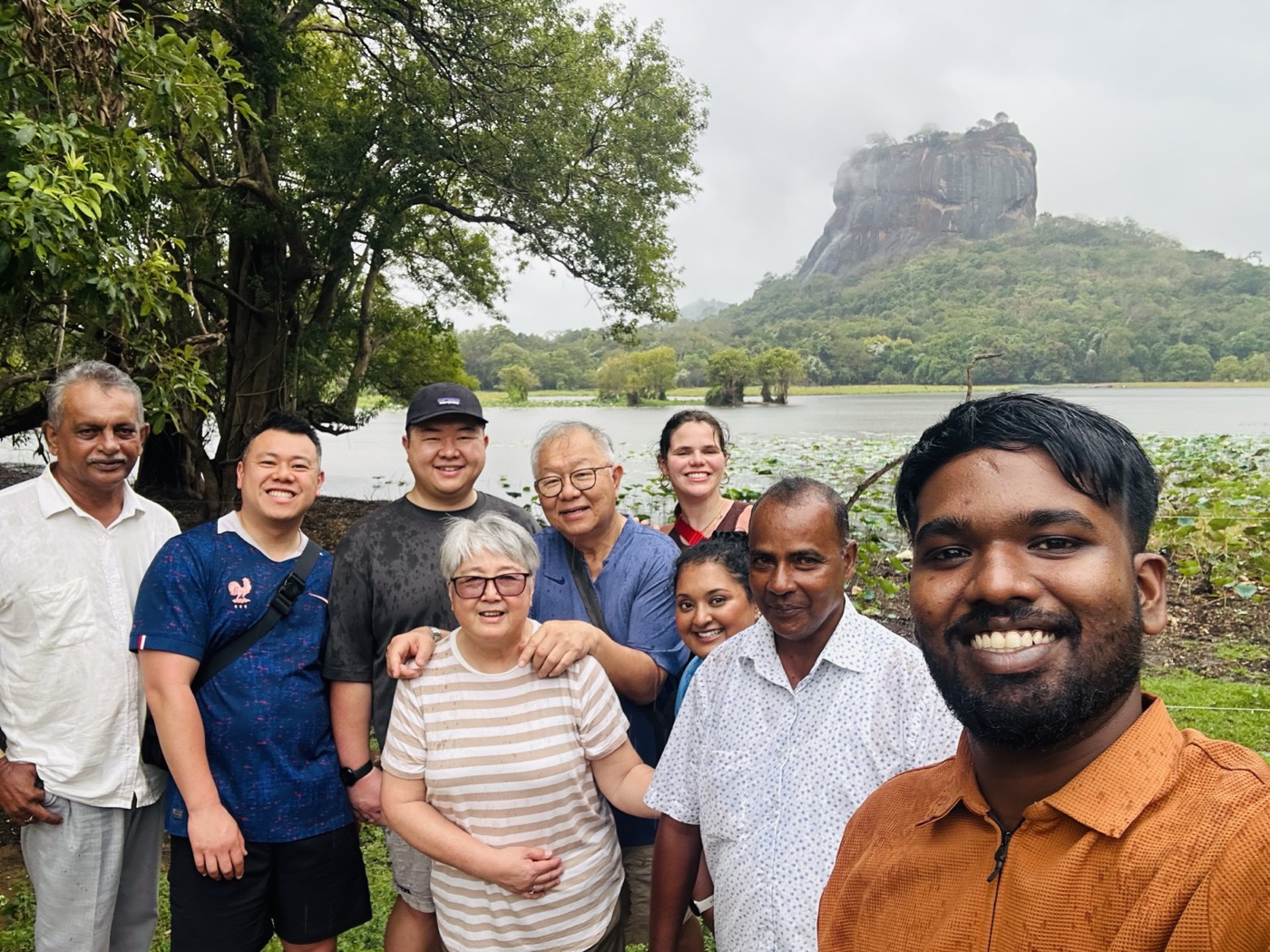
With a group of travellers, Sigiriya rock behind.
Transforming Valleys into Frontier Workspaces
Imagine the transformation of hidden sanctuaries like Mandaram Nuwara, the valleys of Knuckles, or the rugged northern coast of Jaffna. Instead of remaining economically depressed outposts whose youth are forced to migrate to urban slums, these regions can become world-class distributed hubs.
The infrastructure requirements are astonishingly modest compared to building massive five-star mega-resorts: First, sovereign high-speed bandwidth—blanketing highland valleys with Starlink and fiber-optic connectivity so an operator can push code to global servers while sitting beside a mountain stream. Second, decentralized solar and micro-hydro power grids that ensure continuous electricity during national supply disruptions. Third, curated builder residences—comfortable, ergonomically designed workspaces built with sustainable local timber and granite, offering quiet sanctuaries for deep intellectual creation.
When you provide high-agency thinkers with pure mountain air, organic local food, profound silence, and world-class connectivity, Sri Lanka stops competing on 'cheap beach prices' and begins competing as the premier cognitive sanctuary of South Asia. We become the laboratory where global innovators recharge their batteries, synthesize groundbreaking ideas, and collaborate with local talent.
Empowering the Local Sovereign Operator
The true beauty of distributed tourism is its radical egalitarianism. It bypasses corporate middlemen. A village family in Hanguranketha or a fisherman's cooperative in Trincomalee can host global creators directly, using decentralized booking platforms and digital payments.
The wealth stays in the soil. It incentivizes local communities to protect their natural forests, preserve their ancient archaeological ruins, and maintain their cultural heritage, because travelers come precisely for the uncommercialized authenticity. It restores dignity to provincial life, proving that you do not need to move to a concrete Colombo high-rise to participate in the global economy.
It also bridges cultural divides: instead of foreign visitors looking down at locals from air-conditioned tour buses, they sit together on verandas sharing home-cooked jackfruit curry, discussing sustainable farming, open-source technology, and global geopolitics. Tourism transforms from an extractive industry into an authentic civilizational exchange.
To accelerate this shift, Sri Lanka must reform its restrictive zoning laws and hospitality regulations, which were designed exclusively to favor multi-million-dollar resort conglomerates. The state should issue streamlined 'Digital Nomad Visas' granting one-to-two-year tax-free residency to verified remote creators, engineers, and researchers, provided they maintain sovereign health insurance and spend locally. We should establish decentralized co-working sanctuaries in heritage towns like Galle Fort, Kandy, and Trincomalee, turning old colonial warehouses and tea plantation bungalows into high-bandwidth creative crucibles. By opening the island to the brightest sovereign minds on the planet, we spark intellectual cross-pollination that will inspire the next generation of local builders.
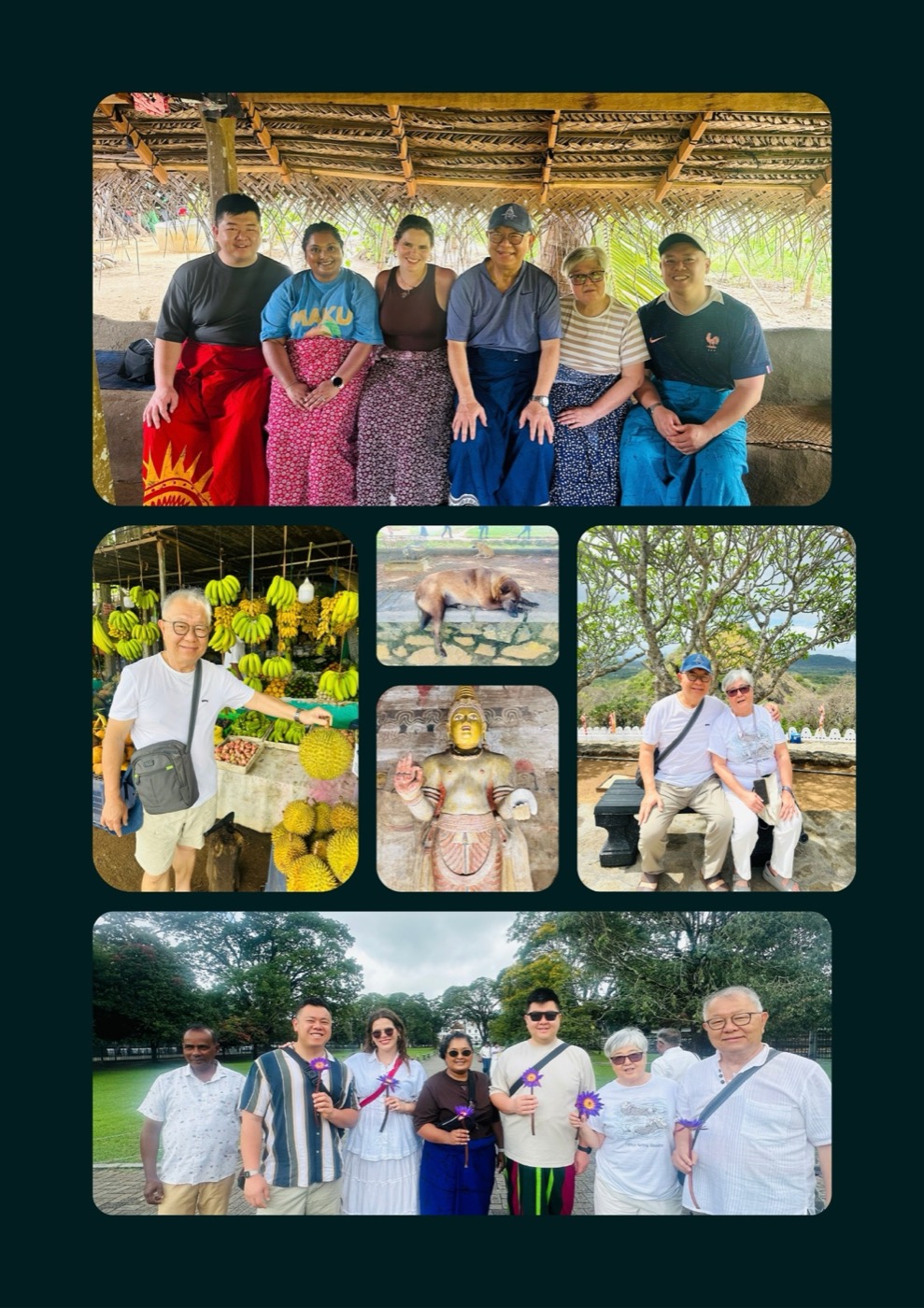
Tourism poster I designed — travellers' journeys.
How I See Things: The Tourism Verdict
How I see things is that the era of packaged, herd tourism is rapidly reaching its expiration date. Sri Lanka must stop begging foreign vacationers to sit on overcrowded beaches and start positioning itself as the global capital of distributed living.
Dismantle the old Golden Corridor. Invest in rural fiber, clean decentralized energy, and local community infrastructure. Open up the hidden valleys and ancient stone ruins to the creators, thinkers, and builders of the world. In doing so, we will not only rescue our economy, but we will also share the enduring spiritual wisdom of our island with a world that desperately needs it.
Keep going: ← Devastating Life Predictions · The Untapped Blue Gold →