Mandaram Nuwara & Mahamevnawa — The Architecture of Tactical Stillness
Why relentless modern hustle guarantees burnout, and how deep mist and monastery stones defragment the kinetic mind.
Volume I: The Internal Crucible — Solitude, Sickness & Self-Funding
The Disease of Hyper-Kinetic Friction
We live in an era afflicted by a collective neurological psychosis: the worship of perpetual motion. Modern digital culture equates frantic activity with purpose, constant communication with importance, and round-the-clock availability with high performance. We wake up to flashing notifications, spend our working hours trapped in dopamine-fueled cognitive fragmentation, and collapse into bed scrolling through algorithmically curated feeds of stranger outrage. Even our periods of supposed leisure are weaponized into performative spectacles for social media feeds.
For a kinetic operator who travels constantly, manages technical workloads, and builds autonomous systems, the temptation to accelerate perpetually is almost irresistible. You believe that if you just push ten percent harder, run five more miles, and optimize another thirty minutes of sleep, you can outpace entropy. But physics cannot be cheated. High-velocity output without structured, deliberate stillness does not produce genius; it produces catastrophic psychological burnout, creative sterility, and moral exhaustion.
How I see things is that stillness is not the absence of productivity; it is the ultimate prerequisite for high-order leverage. If you cannot stop, you cannot steer. To preserve my sovereignty in a world drowning in synthetic noise, I developed the deliberate architecture of tactical stillness—retreating into the ancient mists of Mandaram Nuwara and the quiet stone courtyards of Mahamevnawa monastery.
Mandaram Nuwara: The Valley Behind the Sun
Tucked into the shadowy eastern slopes of Mount Piduruthalagala—Sri Lanka’s highest peak—lies Mandaram Nuwara, a village shrouded in atmospheric isolation. The surrounding jagged ridges rise so steeply that the valley loses direct sunlight early in the afternoon, plunging the village into a twilight of cool, drifting mists, roaring mountain streams, and primeval silence long before nightfall. There are no corporate hoardings, no luxury shopping malls, and frequent stretches where mobile signals completely evaporate.
Arriving in Mandaram Nuwara after weeks of intense university study and urban transit is like experiencing a hard reboot of the nervous system. The immediate sensation is one of profound disorientation: the subconscious mind, accustomed to being pelted by dozens of digital micro-stimuli every minute, scrambles to find something to react to. The phantom vibrations in your pocket, the compulsive urge to check an inbox, the phantom anxiety of 'falling behind'—they all flare up in the quiet air like dying embers.
Then, as you walk along the mossy footpaths beside cascading waterfalls, breathing the damp, pine-scented mountain air, something extraordinary occurs: the internal static settles. The mental cache clears out. When the external world ceases to scream at you, you are finally forced to confront the internal dialogue you have been outrunning with busywork. In the cold mist of Mandaram Nuwara, the petty ambitions and superficial anxieties that felt so urgent in Colombo reveal themselves to be utterly insignificant.
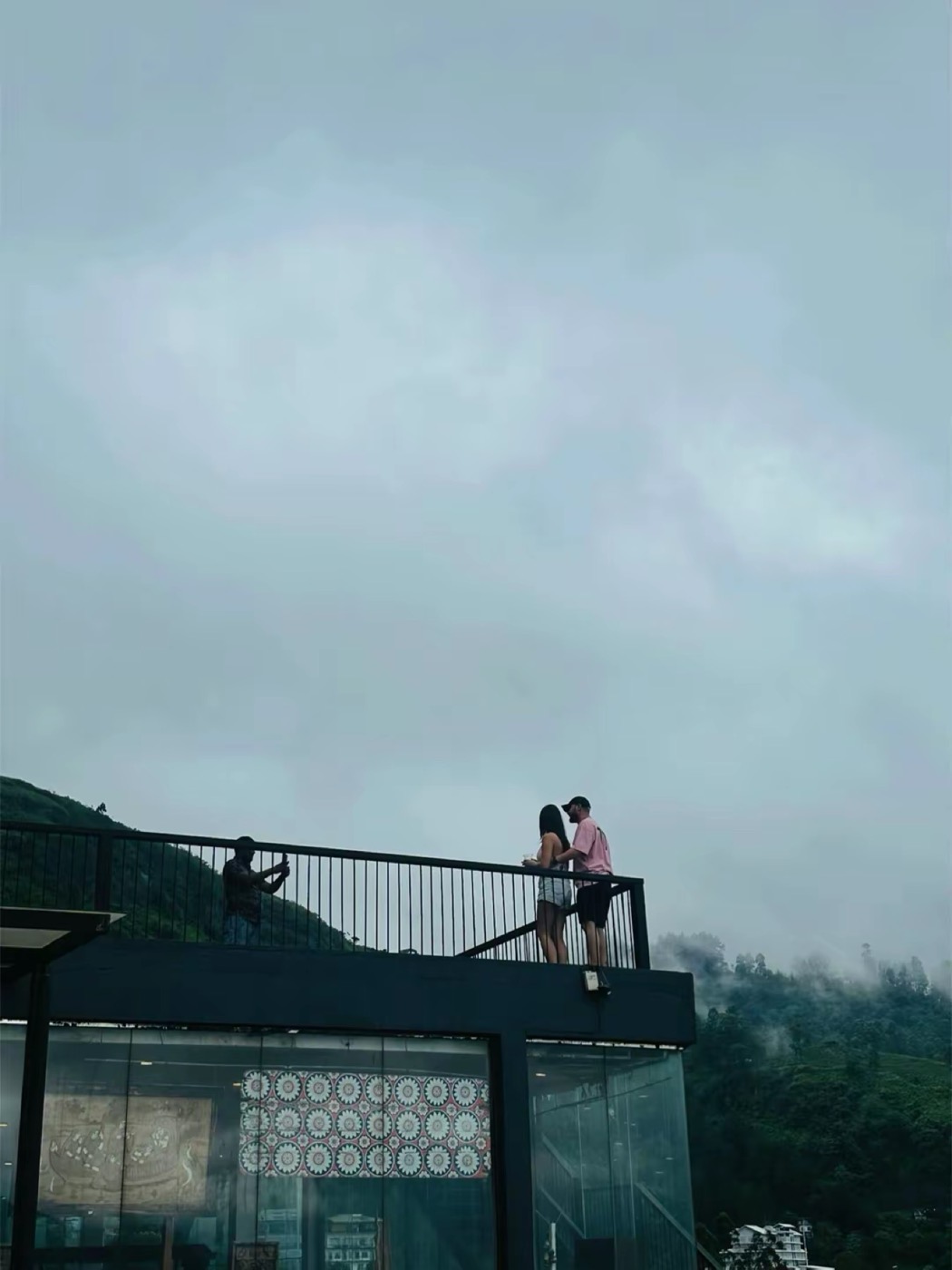
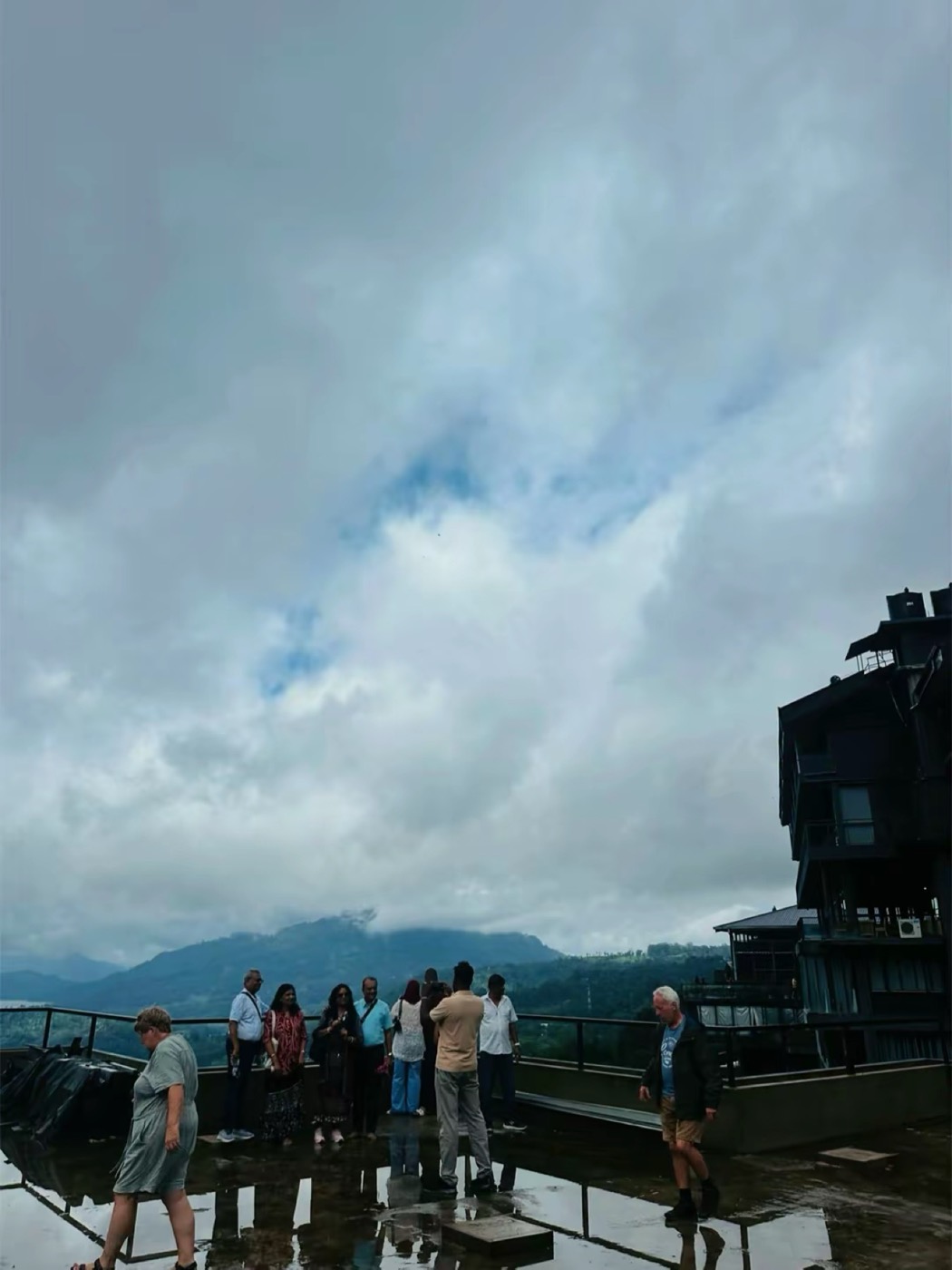
Mist over the viewpoint.
Mahamevnawa: The Discipline of Granite and Saffron
If Mandaram Nuwara offers the sensory tranquility of raw nature, the monastery of Mahamevnawa provides the structured, architectural discipline of the spirit. Entering the monastery grounds, the chaos of Sri Lanka’s bustling roads vanishes behind white plaster walls and ancient shade trees. The ground beneath your bare feet is composed of cool, swept sand and ancient stone slabs worn smooth by centuries of pilgrims.
What strikes you most about Mahamevnawa is not dogmatic ritualism, but the palpable, radiant poise of the monks. Watching a saffron-robed monk walk along a shaded colonnade is an education in human dignity. Every step is deliberate, every movement economical, and every glance unhurried. There is zero hurry, yet immense focus. They have renounced the entire apparatus of worldly status, material consumerism, and digital chatter, yet they possess a serene authority that billionaires spend fortunes trying to manufacture.
Sitting in the silent hall of Mahamevnawa, observing the breath while the afternoon breeze stirs the leaves of the sacred Bo tree, you realize that true power is the ability to sit completely still in a room without needing to reach for a distraction. Blaise Pascal was right: human misery blossoms precisely because we cannot endure our own internal company. When you strip away the smartphone, the conversation, the book, and the ambition, what remains? If the answer is terror, then you are a slave to whatever distraction passes by. But if you can sit in that emptiness with calm vigilance, you discover an unshakeable bedrock of inner strength.
The Mechanics of the Tactical Reset
Tactical stillness must never be confused with lazy escapism or permanent withdrawal from the arena. I do not retreat to Mandaram Nuwara or Mahamevnawa to hide from the world; I retreat there to forge the weapons required to conquer the world. It is a tactical defragmentation, directly analogous to the disk optimization processes of early computer engineering.
When an operating system runs for months without maintenance, files become fragmented across memory sectors, read-write speeds plummet, and latency spikes. The human brain operates on identical principles. Constant context-switching, urban friction, and social obligations fragment your cognitive bandwidth. A 48-hour tactical stillness protocol cleans the memory registers. It allows subconscious insights to coalesce, separates signal from noise, and recalibrates your moral compass.
During these retreats, I observe three inviolable rules: First, zero digital connectivity—the smartphone is switched off and locked in the backpack. Second, radical sensory reduction—no commercial entertainment, no stimulating music, and simple, wholesome food. Third, deep journaling with physical ink on paper. Writing by hand on textured paper forces your thoughts to slow down to the speed of the pen, filtering out superficial impulse and unearthing deep, structural truths about your life trajectory.
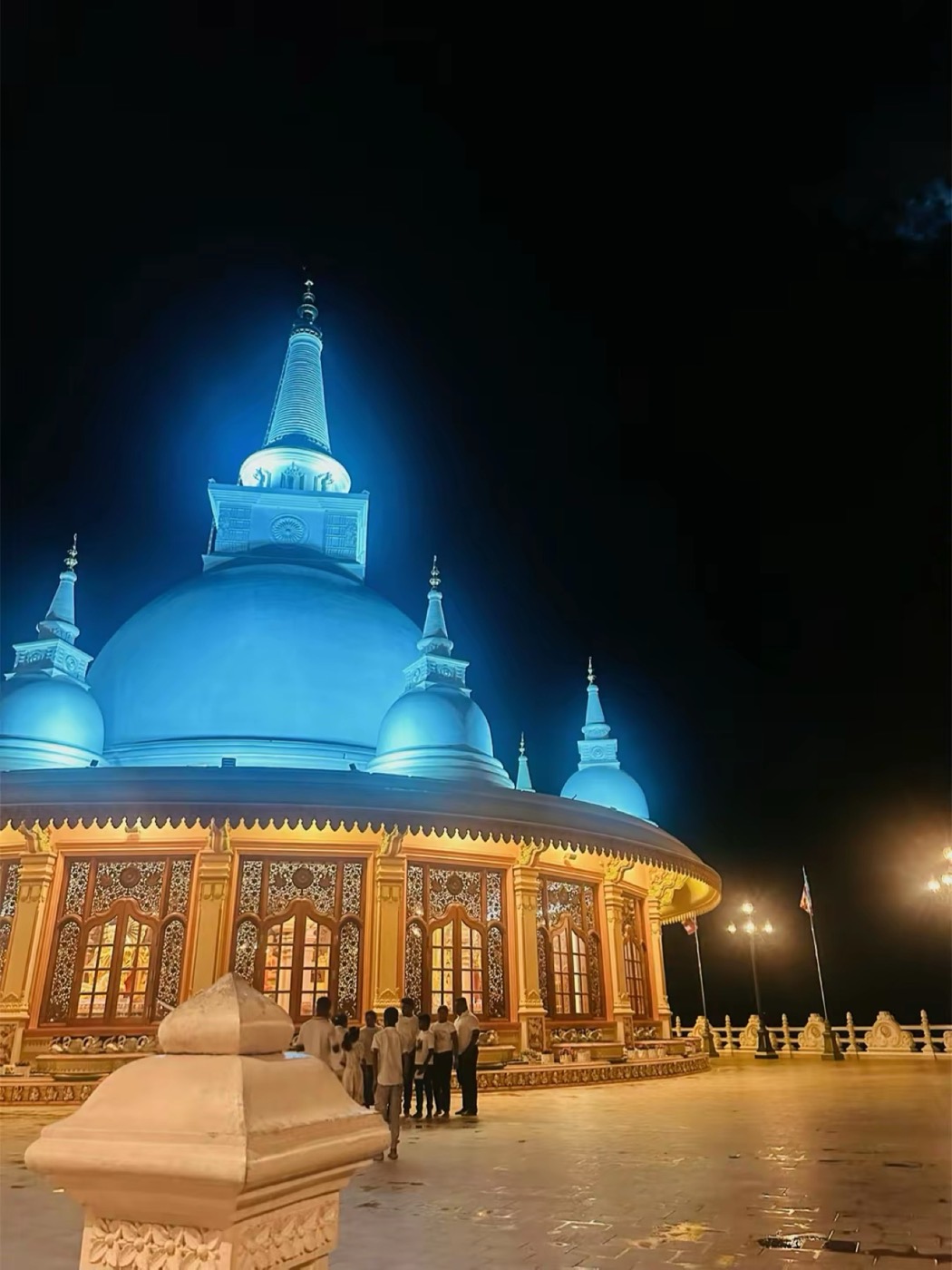
A stupa lit blue at night.
How I See Things: The Stillness Verdict
How I see things is that in a world driven mad by frantic speed, stillness is the ultimate asymmetric advantage. The masses will continue to run in frantic circles on the hedonic treadmill, mistaking motion for progress and exhaustion for achievement. Let them.
Build sanctuaries of silence into your life. Whether it is a hidden valley wrapped in highland mist or a monastery courtyard paved in white stone, find places where the modern world cannot touch you. Learn to sit alone in the dark with your own soul without trembling. When you emerge from that stillness, your mind will be sharper than a scalpel, your vision crystal clear, and your kinetic agency unstoppable.
Keep going: ← The Bell Jar of Physical Fever · Financial Sovereignty →