Graph Theory for the Backpack Operator — Traveling Salesman on Sri Lankan Roads
How treating island travel as a dynamic directed graph maximizes rupee efficiency, cognitive focus, and mobility.
Volume III: Kinetic Logistics & Cognitive Leverage
The Island as a Dynamic Directed Graph
Most people view travel as a romantic, impressionistic blur: packing a bag, showing up at a terminal, buying a ticket on a whim, and letting the day unfold. For a casual vacationer with an unlimited budget and zero deadlines, that relaxed approach might be charming. But for a solitary operator running intensive academic sprints, writing code, and managing tight financial reserves across Sri Lanka, that unstructured passivity is suicidal. It leads directly to stranded nights at desolate junctions, depleted laptop batteries, missed exam submissions, and financial hemorrhage.
Very early in my distributed journeys, I threw out the traditional tourist map. Instead, I began modeling the entire geography of Sri Lanka as a dynamic, directed graph G = (V, E). The vertices (nodes) were railway stations (Colombo Fort, Polgahawela, Peradeniya Junction, Nanu Oya, Ella, Batticaloa), central bus stands, PickMe pickup points, affordable homestays, and tea stalls equipped with functional electrical outlets. The edges represented the physical transit corridors connecting them.
Crucially, the weight assigned to each edge was not simply physical distance in kilometers. Distance in Sri Lanka is a notorious lie: fifty kilometers on an express highway takes forty minutes; fifty kilometers through the winding tea hills of Nuwara Eliya on a sluggish private bus can take four grueling hours. I weighted each edge using a multi-variable cost function: transit duration, financial cost in rupees, road elevation gradient, weather friction (monsoon downpours), and physical cognitive fatigue. Traveling across the island became an applied exercise in operations research.
Solving the Traveling Salesman Problem with Real-World Friction
In computational mathematics, the Traveling Salesman Problem (TSP) asks for the shortest possible route that visits every city in a list exactly once and returns to the origin. On the ground across Sri Lanka, the problem is exponentially more complex because the transit network is non-deterministic. Trains suffer sudden engine failures on the steep incline to Hatton; private buses engage in reckless high-speed races along narrow mountain curves; flash floods turn coastal causeways into impassable rivers; and fuel supplies can fluctuate without notice.
To navigate this environment, I developed dynamic priority routing. I never mapped out rigid fourteen-day itineraries. Rigid schedules shatter upon first contact with reality, generating acute psychological stress. Instead, I operated with a rolling forty-eight-hour planning horizon, updating my route weights in real time based on incoming telemetry: weather forecasts, local railway chatter, station master advisories, and battery status.
If a morning express train from Kandy to Badulla was canceled, I didn't sit on the platform cursing my luck. I immediately executed an alternative edge on the graph: hopping onto an unreserved slow bus to Nuwara Eliya, transferring to a local three-wheeler to reach a high-altitude homestay with reliable hydroelectric power, and using the transit delay as a dedicated window for reading. When your mental model is a graph, a blocked node is not a disaster; it is merely an invitation to compute an alternative path.
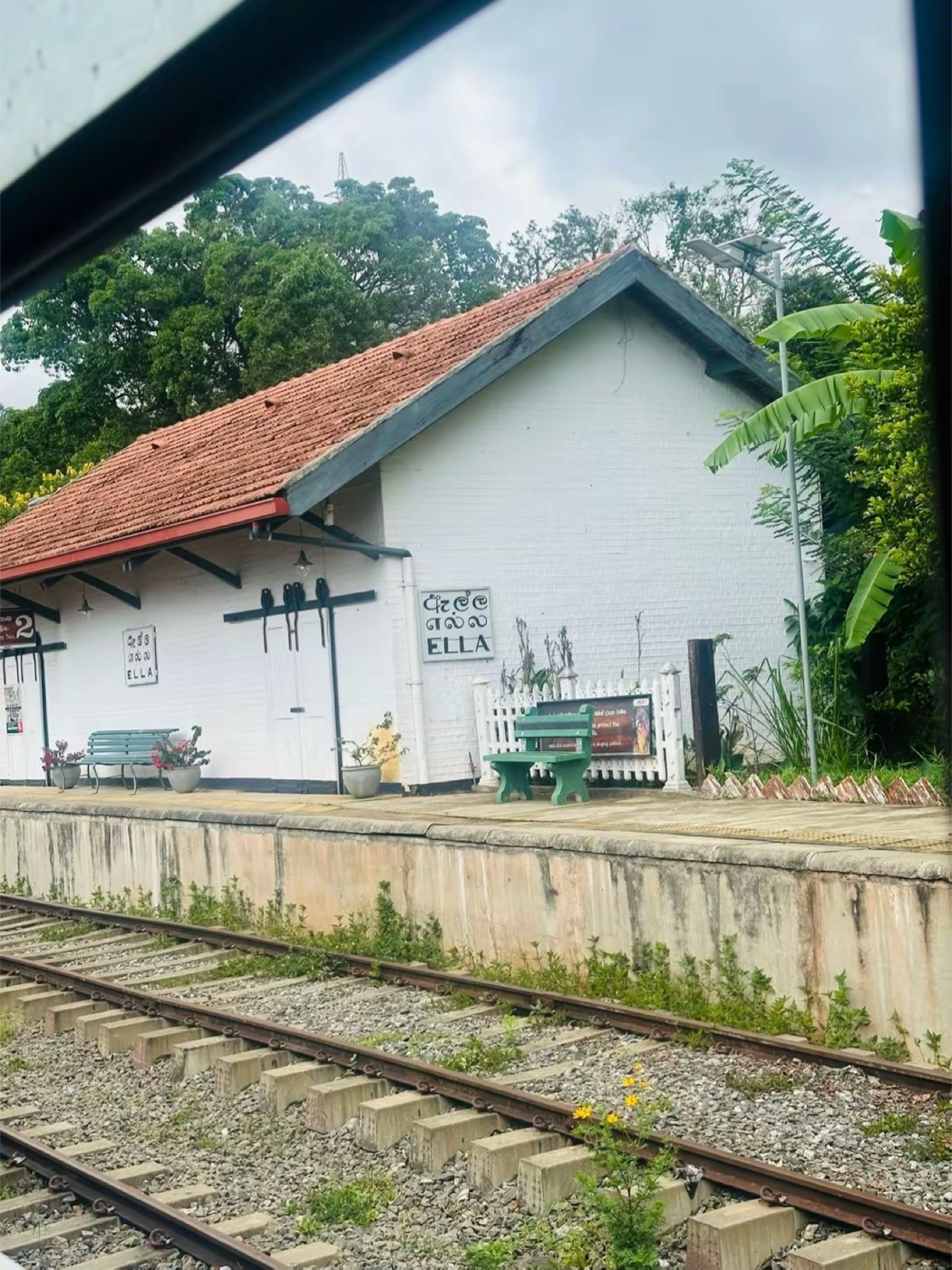
A hill-country railway station.
The Kinetic Logistics Stack: Gear, Power, and Bandwidth
To maintain complete fluidity across the graph, your physical hardware stack must be ruthlessly optimized. Every additional ounce in your backpack is a tax on your mobility. I reduced my entire existence down to a single 38-liter tactical backpack weighing exactly 8.5 kilograms.
Inside that pack, redundancy was strictly reserved for the core lifelines of survival and intellect: First, sovereign power—a high-capacity 25,000mAh external battery pack capable of keeping my laptop and phone operational through twenty-four hours of rolling grid blackouts. Second, sovereign bandwidth—dual SIM cards on competing telecommunications networks (Dialog and Mobitel), allowing me to tether high-speed data even in deep jungle ravines where one carrier’s towers went dead. Third, weather armor—an ultralight, ripstop waterproof shell that protected my electronics through sudden tropical monsoon torrents.
Living out of that pack taught me the beauty of extreme minimalism. I owned two shirts, two pairs of quick-dry pants, one pair of rugged trail shoes, and my electronic toolkit. When you eliminate wardrobe decisions and material baggage, your cognitive processing speed skyrockets. You can pack your entire world in ninety seconds, leave a room before dawn, and board a moving train with effortless grace.
The Rupee-Efficiency Frontier
A critical component of my graph-theory logistics was maximizing rupee efficiency. As a self-funded student, every rupee saved on transit was a rupee that could be reinvested in high-speed cloud compute, books, or healthy sustenance.
I analyzed Sri Lanka’s transport options along a Pareto frontier. Third-class unreserved train travel was the uncontested champion of efficiency: for less than three hundred rupees (under one US dollar), you could traverse one hundred and fifty miles of breathtaking mountain scenery while sitting in an open doorway with fresh highland air clearing your lungs. PickMe and three-wheelers were reserved exclusively for high-leverage 'last-mile' connectivity—bridging the gap between a remote train station and an isolated workspace when walking would consume two hours of prime cognitive energy.
By understanding the cost-latency curves of every transport mode, I traveled across thousands of kilometers of Sri Lankan territory at an operational expense lower than the cost of sitting stationary in a shared Colombo apartment. I turned the entire island into a free, open-air laboratory.
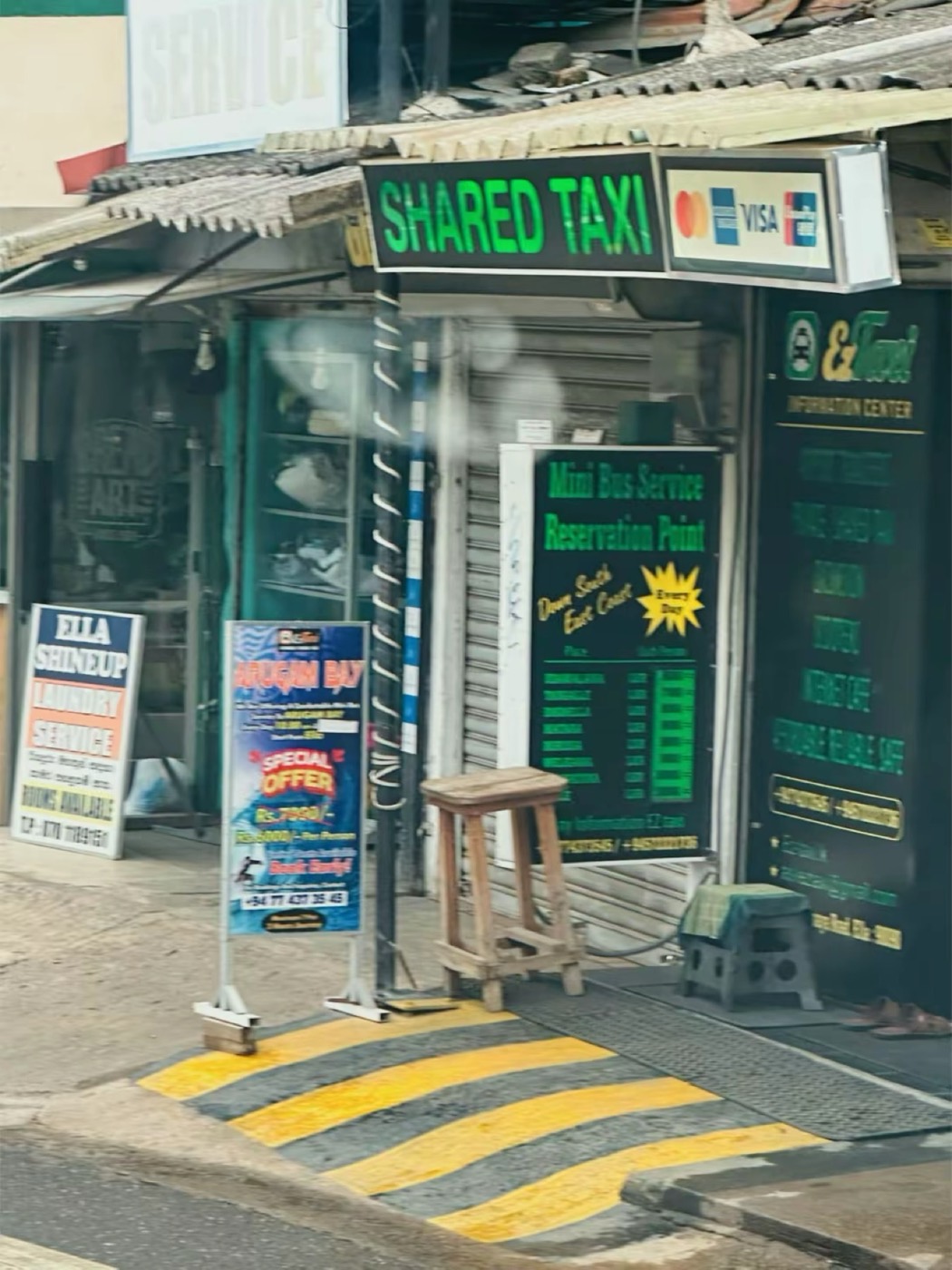
The shared-taxi stand.
How I See Things: The Logistics Verdict
How I see things is that physical mobility is the ultimate catalyst for mental agility. When you sit in the same room, stare at the same walls, and take the same bus to the same office every day, your neural pathways calcify. Your thinking becomes as narrow as your physical perimeter.
Treat your environment as a dynamic graph. Strip your gear down to the bare essentials, master the transit infrastructure of your land, and learn to navigate through friction with mathematical detachment. When you become a master of kinetic logistics, geography stops being a barrier and becomes your greatest playground. You can live anywhere, build anywhere, and thrive under any condition.
Keep going: ← Scale AI & Meta AI · The 80/20 Knowledge Guillotine →