The Digital Hippocampus — Why TikTok & Video Logs Preserve Fleeting Reality
Why intellectual snobbery against short-form video is wrong, and how mobile cameras act as an encrypted sensory backup for lived truth.
Volume III: Kinetic Logistics & Cognitive Leverage
The Snobbery of the Traditional Intellectual
In academic and literary circles, there is an ingrained, reflexive contempt for modern digital media formats—particularly short-form video platforms like TikTok, Instagram Reels, and mobile vlogging. Traditional intellectuals love to dismiss these mediums with sweeping, condescending generalizations: 'brain rot,' 'attention-destroying junk,' 'the death of deep literacy,' and 'narcissistic performance.' They urge serious minds to retreat into leather-bound journals and fountain pens, pretending that the year is 1840.
While it is undeniable that commercial algorithms use short-form video to hook passive consumers onto dopamine treadmills, dismissing the technology itself is intellectual blindness. A tool is defined not by how the undisciplined masses abuse it, but by how a deliberate operator wields it. The printing press was used to print astrology pamphlets and religious propaganda long before it disseminated scientific treatises.
How I see things is that mobile video recording, when deployed with intentionality and raw honesty, is one of the most potent cognitive instruments ever placed in human hands. It functions as an externalized, digital hippocampus—a sensory recording device that preserves the fragile, fleeting texture of human reality with a fidelity that written text alone can never match.
The Biological Fragility of Human Memory
Cognitive neuroscience has demonstrated beyond all doubt that human autobiographical memory is not an accurate video recording; it is an active, ongoing process of narrative reconstruction. Every time you recall a memory, your brain subtly alters the details, smoothing out the awkward corners, exaggerating the drama, and reshaping the past to flatter your current self-image. Over five or ten years, your memory of a pivotal season becomes a comfortable myth.
Written journals, while profoundly valuable for philosophical synthesis and introspection, suffer from a specific limitation: they capture only the intellectual narrative of the moment. They record your thoughts about what happened, filtered through your vocabulary and conscious pride. They rarely capture the visceral sensory truth: the exact cadence of your voice when you were terrified, the pale complexion of your skin after three days of fever, the background hum of the diesel engine, or the raw expression of fatigue in your eyes.
A short, five-to-fifteen-second video clip recorded on a phone has no ego. It does not rationalize, flatter, or polish. It records the physics of the photon and the acoustic vibration of the air. It captures reality before your narrative-spinning brain has time to sanitize it.
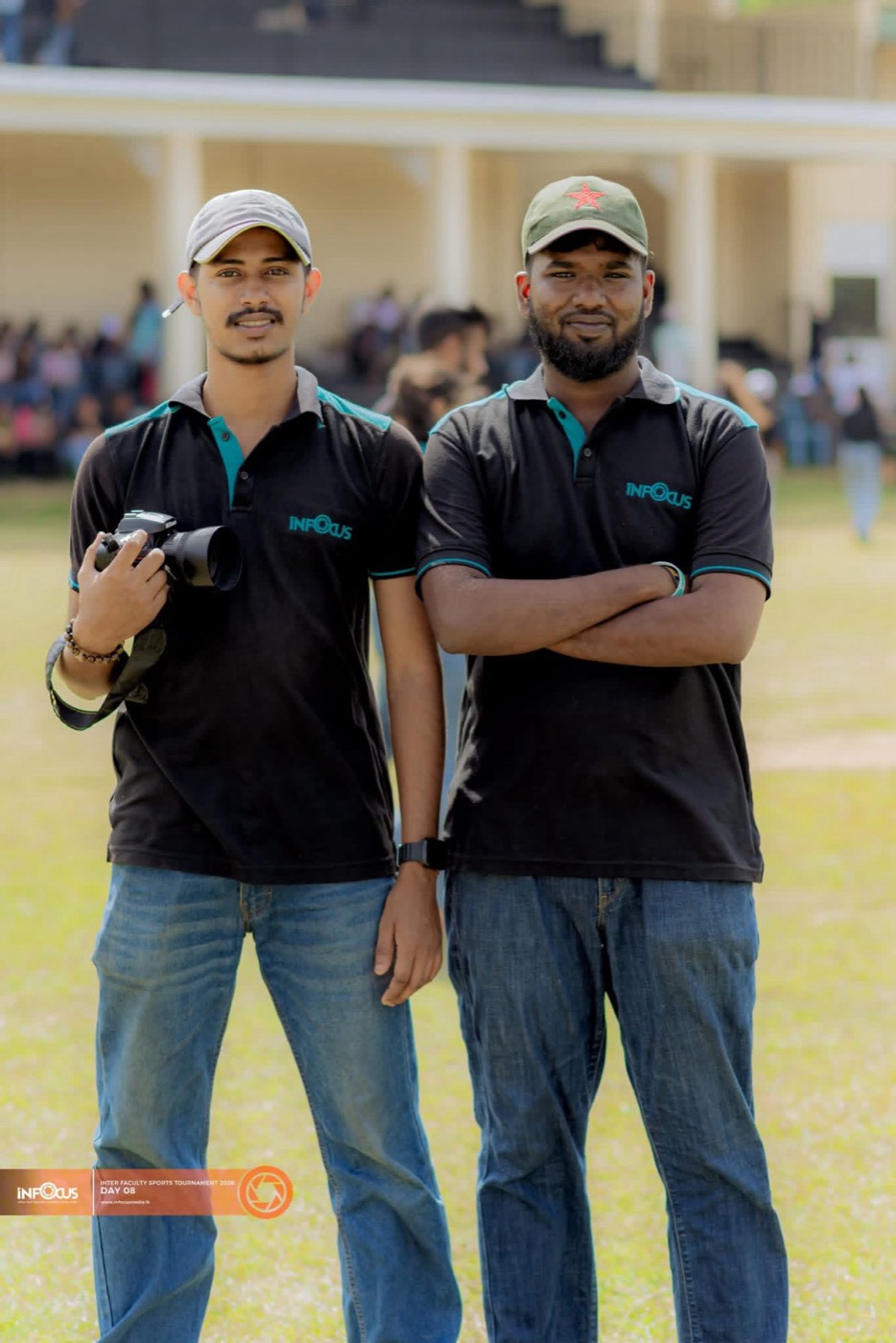
InFocus Media — cameras ready for coverage.
The Practice of the Unvarnished Video Log
Throughout my distributed travels across Sri Lanka, I maintained an unsparing personal video archive. These clips were never recorded for public consumption, algorithmic engagement, or social media clout. Ninety percent of them will never be seen by another human being.
I recorded short, raw dispatches in the moment of friction: standing on a windy mountain pass above Mandaram Nuwara with mist soaking my hair; sitting in a cramped train corridor with my knees tucked against my chest, recording a thirty-second voice memo about an algorithmic proof I had just mastered; looking into the camera in a bare rented room in Trincomalee, exhausted and lonely, speaking candidly about my doubts.
The rule of this archive was absolute unvarnished truth: zero filters, zero theatrical staging, zero motivational platitudes. Just the camera turned on, ten seconds of lived truth, and the camera turned off. It became an encrypted sensory ledger of my evolution. It captured the dirt under my fingernails, the roar of the wind across the tea bushes, and the real-time uncertainty of a twenty-something navigating an unpredictable world alone.
The Resonance of the Externalized Hippocampus
Years later, when you re-watch those raw video fragments, the cognitive effect is astonishing. Reading an old journal entry engages the analytical intellect; watching an unvarnished video clip triggers an immediate, whole-body sensory resonance. The externalized hippocampus bypasses your cognitive defenses.
In an instant, you are back in that damp room. You smell the monsoon rain on the concrete; you feel the ache in your shoulders; you hear the distant horn of the goods train echoing across the tea plantation; you remember exactly who you were, what you feared, and what you were fighting for. It cures amnesia of the soul.
In a world where life accelerates at an exponential rate, preserving your anchor to the ground truth of your origins is essential. It prevents you from becoming arrogant when you succeed, and it prevents you from becoming hopeless when you stumble. You look at the past versions of yourself on video and see that you have survived every storm that once seemed insurmountable. It serves as an empirical ledger of resilience, proving that courage is not a static personality trait, but an accumulated habit of choosing to take the next step.
How I See Things: The Hippocampus Verdict
How I see things is that you should never let academic snobbery alienate you from the extraordinary tools of your era. Stop worrying about whether short-form video is 'high-brow' or 'low-brow.' Reclaim the medium as your private sensory time capsule.
Pull out your phone in the middle of the struggle. Record ten seconds of the rain, the station platform, the tired smile, the unvarnished truth. Do not post it for strangers; lock it away in your private vault. Decades from now, when the memories have faded into soft watercolors, those digital fragments will remain as sharp and unyielding as polished diamond.
Keep going: ← The 80/20 Knowledge Guillotine · Autonomous Agents as Force Multipliers →