Automation Did the Typing. Humans Did the Work.
What automation genuinely saved across 23 projects — and the drawings, verification, font checks, hand calibration and Sinhala writing that only people could do.
Almost every project in this portfolio uses automation: CI pipelines, generated content, AI agents, scripts that call 155 routes or render 20 videos. It's tempting to tell the story as if the automation did the work.
It didn't. Looking back across 23 projects, the parts that made them good were nearly always slow, manual and unglamorous. This is a story about that ratio.
What automation genuinely did well
Credit where it's due. These saved days:
| Project | Automation | What it replaced |
|---|---|---|
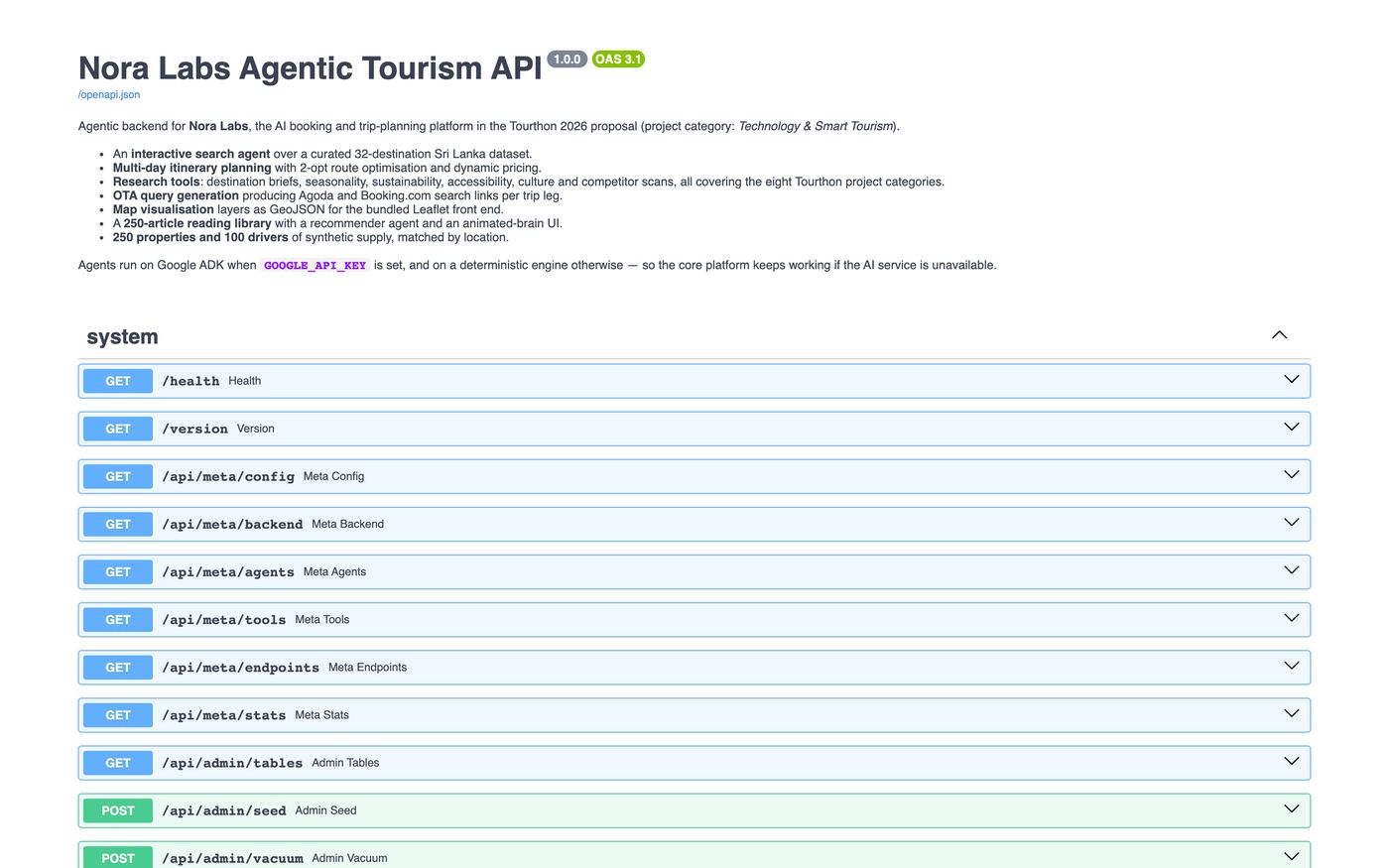
| Nora Labs | generate_articles.py writes 250 articles from the destination dataset | Hand-writing 250 guides whose numbers drift from the API |
| Nora Labs | smoke.py walks all 155 route calls | Clicking through 150 endpoints before a demo |
| React Content Studio | 145 end-to-end checks against real bytes on disk | Manual editing tests that miss escaping bugs |
| Quintrix, CryptoEdge, Part Timer | CI that tests, builds and deploys on push | SSH, git pull, hope |
| CinePrompt | One-click photo search for every scene, three at a time | Searching Commons scene by scene |
| This site | GitHub sync + live checks before every build | Updating stats and "Live" badges by hand |
Every one of these is a loop: the same action, many times, with a clear right answer. That's what automation is for.
What only human effort could do
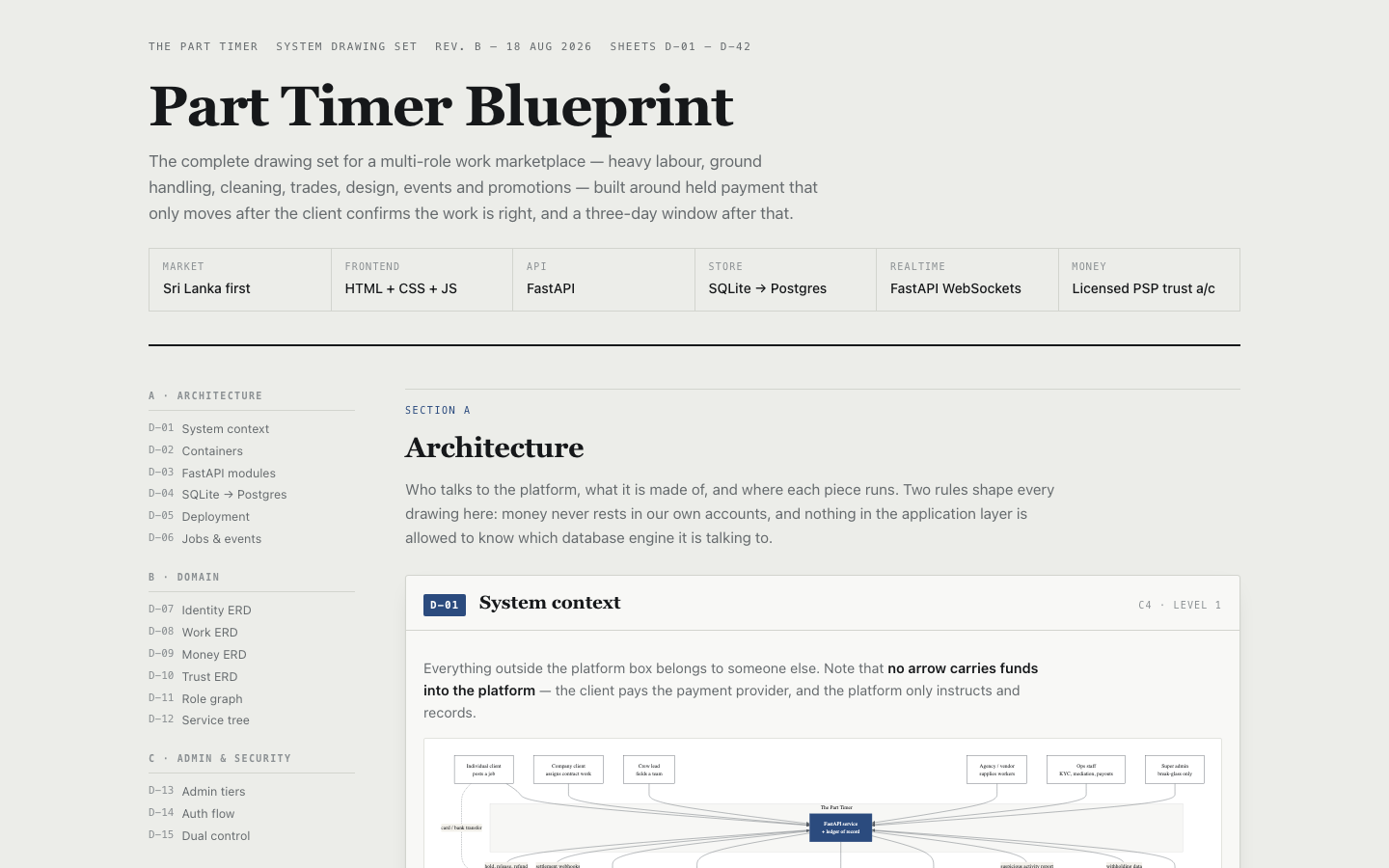
Drawing 42 sheets before writing the marketplace
The Part Timer's most valuable artefact isn't code. It's a 42-sheet system drawing set — architecture, data, admin roles, state machines, chat, ranking, "what is shown to whom", crews, and a sheet mapping Sri Lankan statutory obligations to controls. Every edge case in the prototype — contractor no-show, disputed escrow, self-approved payouts — was found on paper first. No tool would have asked "what happens if the client disputes after approval but before release?" A person thinking slowly did.
Deciding that AI recommends and humans decide
The Part Timer specifies twelve AI agents that fact-check registrations, IDs, licences, portfolios, job posts and chat. The single most important line in that 12-agent spec is a human rule: the AI writes a recommendation; a person approves. That rule took longer to agree than all twelve prompts took to write.
Verifying on real footage, and writing down what wasn't verified
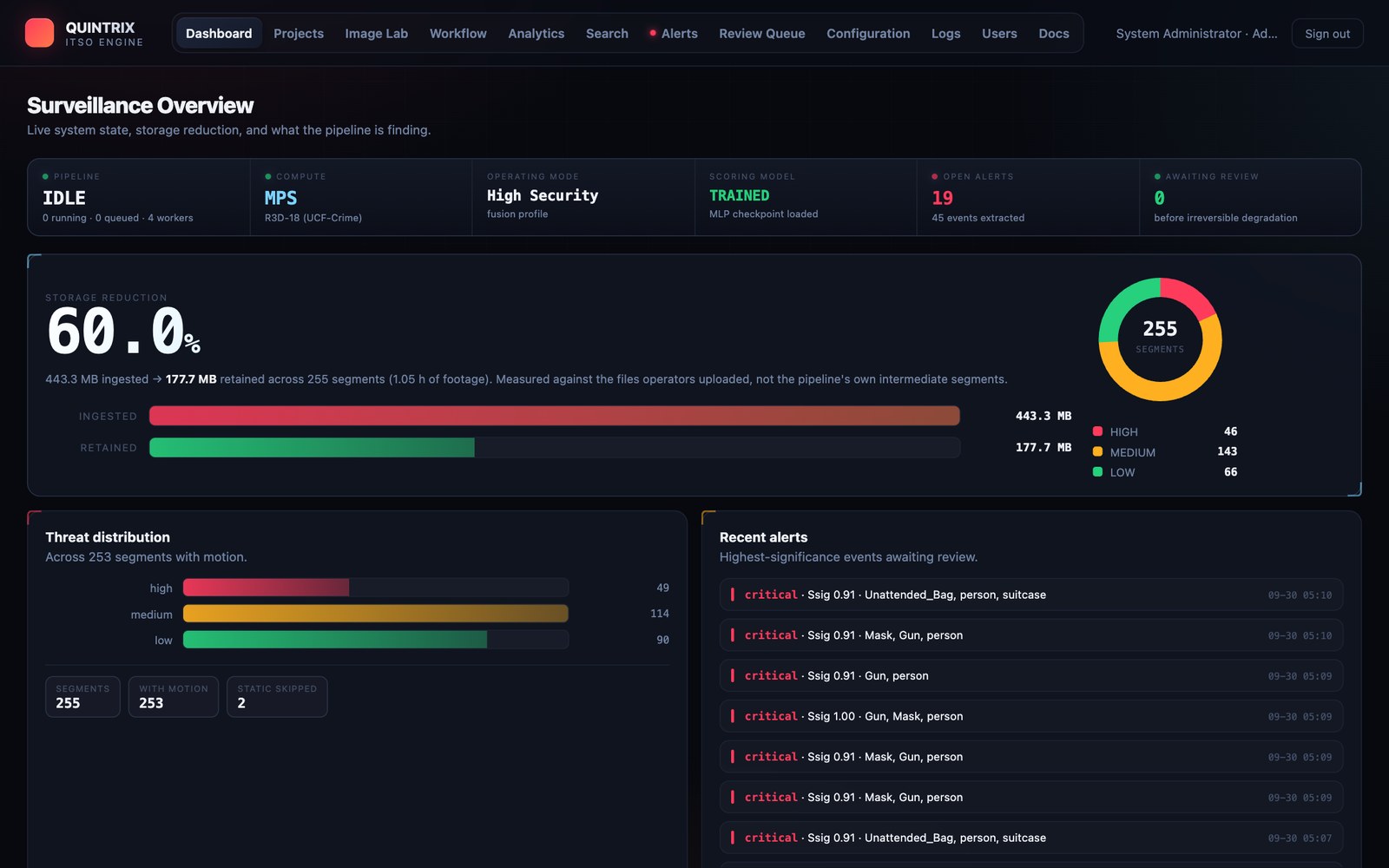
Quintrix ITSO met its 60 functional requirements on paper long before it met them on video. The work that counted was running it end-to-end on real uploaded footage, recording FR by FR what was actually exercised, and fixing the two real defects that pass uncovered. Planform Studio's README goes further and says what hasn't been re-checked: "this is not a claim that every interaction, display mode or download has passed." Honest verification is human work.
Making 285 Sinhala fonts actually render
Helakuru Studio bundles 270 legacy Sinhala fonts that store glyphs at ASCII code points. Making them usable meant building an encoder — but also checking every font renders Sinhala correctly, one by one, filing them into family folders and grouping the picker the same way. Automation can render a preview; only someone who reads Sinhala can tell you the ispilla is in the wrong place.
Calibrating images by hand, on purpose
Planform Studio could have "auto-traced" floor plans from drone photos with a model. It doesn't. A person picks two points and types the real distance, because a confident wrong wall at architectural scale is worse than no wall. The README states it plainly: reference images are calibrated and traced — not interpreted by AI.
Writing tourism content from a handwritten plan
Mahesh Travellers' nine-stage reference itinerary came from Mr Mahesh's handwritten plan. Turning that into five languages, four journey lengths, 19 activities and 20 article pages — while keeping his "10 years of experience" in his words and removing a competitor directory that came with the source files — was careful editing, not generation.
Capturing the failures
The W3DevOps handbook keeps 136 screenshots, including the SSH permission errors, firewall denials and crash loops. Clean screenshots are easy. Choosing to keep the ugly ones because that's what learners will actually see is an editorial decision.
Teaching in Sinhala
The networking hub, the SRE workbook and the DevOps notes explain hard ideas in Sinhala while keeping English terms intact. Machine translation can produce Sinhala text. It can't decide which idea a second-year student will trip over, or that a pizza-delivery analogy makes SLI vs SLO click.
Human gates I now build into automation
The best pattern I found is automation that stops and asks:
- TuitionStudio's
deploy.shprints what it would do and only creates cloud resources with--apply. - Quintrix's CI never creates infrastructure — it only redeploys an existing VM; provisioning is a documented one-time human step.
- CryptoEdge needs a typed
LIVEbefore real money moves. - Planform replaces a whole building only after a confirmation checkbox that resets if anything changes.
- The Part Timer's payouts need two different people (dual control), and the super admin can't move money at all.
The ratio
If I had to estimate, the automation in these projects took a few days to build, and it saves time every single week. The human effort took months, and it's the reason the automation is pointed at the right thing.
Automate the loops. Spend the human hours on the decisions.
Read how the pipelines are built →
Keep going: ← Previous story · Next story →
Finished this one?
Progress is saved in this browser.
Projects in this article
Enterprise
The Part Timer
Decentralized labor and gig work marketplace for Sri Lanka connecting skilled crews, trades, and enterprise clients.
ML & Vision
Quintrix ITSO Engine
Content-aware retention for CCTV: score every 15-second segment by what happens in it, keep incidents lossless and empty corridors as keyframes. 60.0% less storage on the evaluated footage.